
Off the Rails
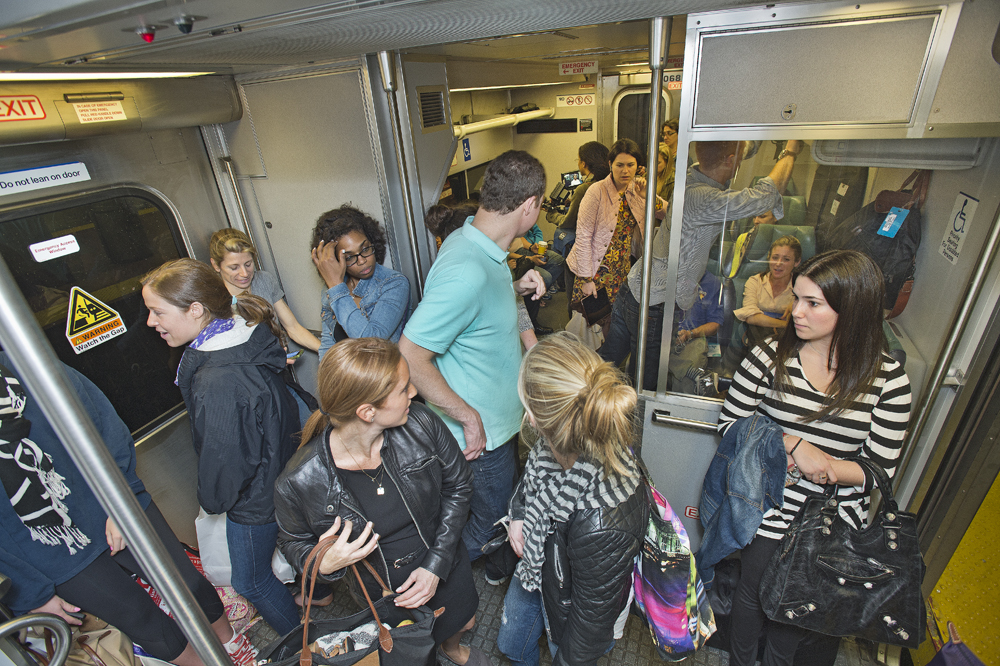
A fourth-generation locomotive engineer, Jeff Anderson joined the service of the L.I.R.R. in 1987. A hardcover edition of his memoir was published last winter, just as the commuter transit line was making headline news with an upcoming strike, which disrupted service in May before the union and head office came to terms. “After hearing multiple times during my career that somebody should write a book about this place,” Jeff says, “I decided to take up the cause.” Anderson is retired now and living with his wife in the U.S. Virgin Islands. Thirty Years Behind the Throttle can be found on Amazon; East recommends it as a top-notch beach read. This chapter is about the lore the train crew passes down the line over time — and, in particular, a legend of Shinnecock Hills they called “the White Witch.”
Without a substantial service disruption, we’d usually roll into Speonk five minutes early. I’d drop the throttle after the last curve through Eastport. Even though it was late September, the daytime heat and humidity made it feel more like July. About an hour after sundown, conditions were considerably better, the last remaining source of heat a massive diesel engine. Summer days could be brutal inside the cab of a GP-38 locomotive, even with windows and both doors tied open. I often compared it to working inside a rolling pizza oven. The key to survival was to remain in motion and drink plenty of water.
The mismatch between real running time and scheduled running time was a direct result of a command decision made by Charles W. Hoppe; thirty-fourth president of the L.I.R.R.. He’d miraculously improved on-time performance (which we called “OTP”) by adding around five minutes to every schedule in the timetable. Padding schedules was an easy and inexpensive solution to one of our longstanding problems. However, I always thought it odd that no one had picked up on Chuck’s timetable tinkering when accolades for improved OTP were handed out. After all, trains were still covering the same distance in the same amount of time.
We coasted into Speonk without a hint of urgency, the station stop so smooth most passengers were unaware of a lack of forward motion. The coach doors took a few seconds to open; apparently the crew lost track as well. A few weekday regulars stepped off and made their way into a dimly lit parking lot. Flashing taillights indicated where vehicles had been left a dozen hours earlier. A full minute after our regulars stepped off, one of our exceptionally valued customers staggered onto the platform. He had trouble remaining upright, and felt his way forward, lamppost to lamppost.
The term “valued customer” was another recent addition to our railroad lexicon. A directive issued from Mr. Hoppe’s office mandated the use of the new term in place of others. How, with the stroke of a pen, could common passengers suddenly be something better? I often thought of a customer as someone who had a choice. Every customer was actually valued when competition was present, but when it wasn’t, customer appreciation seemed pretty much irrelevant.
For those unaware, the monopoly on commuter rail service on Long Island belongs exclusively to the L.I.R.R. When I hired on, if memory serves me correct, the company’s motto was, “Take the Long Island Rail Road or suffer on the Long Island Expressway.”
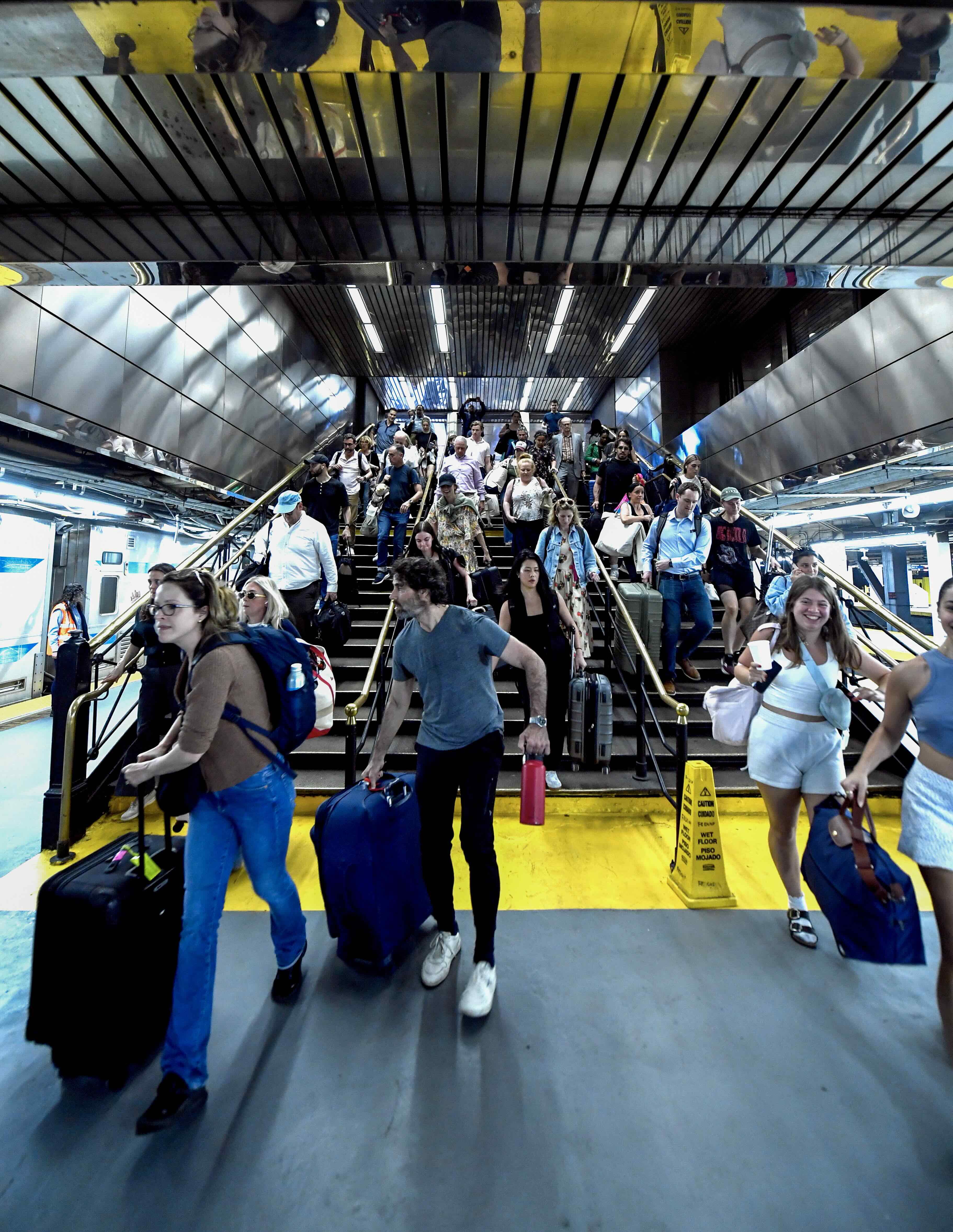
“Valued customer” was just one example of the jargon coming into workplaces at that time, part of a long list of ineffectual others. The 1990s, it seemed to me, was the decade Americans preferred being lied to. In an office environment where Kool-Aid-chugging supervisors hovered over desk jockeys chained to cubicles, politically correct changes like this may have been easy to instill. In the field, however, rarely did they seep into every nook, cranny, and outlying terminal.
Many in train service took exception. Change often created friction on the railroad, especially among its most seasoned employees. In some circles, there was a belief that changing the title of those who rode the trains wouldn’t help maintain order or collect fares. As a result, many crew members used the new term to describe only the very worst clientele. If a senior Conductor told a fellow crew member he had a “valued customer” in the second coach, you could bet trouble was brewing in the second coach. “V.C.” was a popular abbreviation, especially amongst crew members who’d spent impressionable years in Vietnam.
On this fine September evening, the man in general charge of the train was Artie Stuttgart, the epitome of the title Seasoned Conductor. In Speonk, protocol dictated the Conductor walk up to the engine and hand off paperwork. Artie had copied clearance cards over the radio earlier, and even though I’d heard the transmissions on the engine, I was still entitled to an original hard copy. An Engineer never had to ask a guy like Artie to deliver paperwork. Such a request would be considered insulting.
Stepping off the train a few yards behind our valued customer, Artie had the worn and weathered face of a man who once drank too much for too long. He had nearly 40 years on the job, yet — rumor had it — no intentions of retiring. Artie’s eyes squinted through smoke rising from a pipe clenched between yellow teeth. He stared down Mr. V.C., clearly with no concern for his well-being, then walked past him without a second glance or a single word.
Artie looked as though he lived in his Trainman’s uniform. The blue polyester mix was rumpled, worn, and faded. For the last decade, everybody knew Artie as the man who owned the big half-night job in Speonk. He put in 11 hours a day, five days a week, then worked both days off. God only knew when Artie’s last real day off was, proving in a way that he really did live in his uniform. I’d heard the story of his divorce and the beating his pension had taken. However, like others, he believed in a sound contingency plan. All he had to do was outlive his ex-wife. It was the excuse he used most when asked about retirement.
The story of one of the worst rail accidents in the company’s history was also tied to Artie. About ten years before my arrival, Artie’s train slammed into a party van that had skirted the crossing gate to beat an oncoming train at Herricks Road in Mineola. Nine teenagers had been killed. As the Conductor of that train, it was Artie’s job to be the first to search through the wreckage. Shortly afterward the divorce hit, then he’d bid onto the big Speonk job. Most people assumed he’d decided to ride things out quietly on the East End until retirement, but the years went by and Artie never left. Late night jobs on long-haul diesel runs were always a good place to hide. Interaction with those who made policy was rare. Supervision was nonexistent if everything ran smoothly.
I had been called off the “extra” list to cover the job. Only there for the night, I felt as I often did, like an uninvited guest. I liked Artie and his no-bullshit, old-school way of doing things, but there were those who couldn’t stand his modus operandi. His accumulated knowledge of all things railroad was unquestionable. If nothing else, a certain level of respect came with so many years of service. As far as Artie was concerned, if an Engineer kept his train rolling smoothly and on time, everything would be fine.
Artie climbed upon the catwalk on the rear of the locomotive, then made his way up to the cab. He handed off our clearance cards before sitting down, pulled the pipe from his mouth, knocked the bowl clean, then slid it into a jacket pocket. After taking a deep breath, he let out a long sigh. Age seemed to be catching up with him, I thought. Perhaps his ex would outlive him?
With a genuine smile I welcomed Artie aboard. “How we doing back there this evening?”
He rubbed both eyes while leaning into his seatback.
“I’ve had better nights,” he said while stretching legs straight. “Did you see that new broad they gave me for a Brakeman tonight? That little Chiclet hasn’t shut up since we left Jamaica. I mean yap, yap, yap all the way out. Lord knows I’m trying to be polite, but if I spend another hour listening to her, there’s a good chance I’ll lose my mind. Maybe I’ve been living alone for too long. Maybe I’ve grown accustomed to the serenity. I asked her to man the fort by herself for a while. If it’s all the same to you, I’ll ride up here for a few miles.”
I nodded. Even I thought Artie’s vocabulary was out of date.
“You don’t have to ask to ride on my engine.”
A clear perception existed between Engineers and Conductors concerning where each craft’s authority ended. Historically, the Conductor was in general charge of the train. However, the Engineer was in charge of everything forward of the first coach. I preferred that arrangement; relinquishing responsibility for the V.C. never bothered me.
He smiled like a kindly old gentleman, reminding me of those who sat on park benches and tossed bits of stale bread to greedy pigeons. “I don’t know what it is, but I think because of my age, some of these young ladies are under the impression I’m harmless. Therefore, I’m safe to tell their sordid life stories to. In reality, I’m just like any other guy — trying to imagine what they look like without a uniform on.”
Artie winked. “Know what I mean?”
“What can you do?” I said, “You have the look of a gentleman with a compassionate soul. But is that really such a bad thing? I’m sure you’re a welcomed sight for the few women who work in the field, considering we have so many horn-dogs on the property.”
I was being sarcastic, but Artie took my words seriously.“I guess I can’t argue with that.”
I glanced at my watch and saw it was leaving time. I leaned out the window enough for the Brakeman to see me, then gave her a half-hearted wave. She returned the same, the horn sounded, and the train clanked back into motion. Westhampton next.
I glanced at Artie with assurance.
“At least she’s watching the time.”
“I warned her about the running time. She’ll be all right.”
We sat quietly, letting the engine do the talking till we got up to speed. I throttled back to keep the speedometer under 50 for an upcoming curve. I turned to Artie and spoke over decreasing decibels. “Not a bad night to be up on the engine.”
Artie nodded in agreement. “Not bad at all. On evenings like this, I almost envy you guys . . . almost.”
I smiled. “We all have our crosses to bear, Artie.”
I lowered the throttle two notches and the noise from the engine room reduced further. “Considering your age, I guess there isn’t much that surprises you anymore.”
I should have considered a better choice of words. For the same reason you never ask a woman her age, one should never refer to a senior man’s excessive time on the property. There were those who detested anyone remaining on the job for more than 30 years. As they saw it, doing so restricted others from moving up. At least I didn’t ask him when he planned to retire. That particular question always stung the old-timers.
Artie looked at me with an expression that implied he didn’t mind.
The last thing I wanted was to rub him the wrong way. His response was minimal.
“You could say that.”
I attempted to steer in another direction. “What I mean to say, is you must have seen some pretty crazy shit out here over the years. Am I right?”
Artie responded with a little more enthusiasm.
“You can definitely say that.”
I thought I’d break the ice with my most recent crazy-shit story.
“I was on this late-night bomb out of New York a few weeks ago. We were headed back to Penn on our last train, probably around one in the morning. We left Hicksville and were coming up on the first overpass west of Divide, humming along around 70 miles per hour. In the distance, I noticed a guy standing near the tracks under the bridge. He was waving, but not in a panicked way. More like a friendly neighbor waves good morning. As we barreled down the tracks, the horn blared and the high beams burned straight into his eyes. A little closer, I realized his pants were around his ankles. He continued to wave at me with one hand, and there was a tall can of beer in the other. He had a big smile on his face, but at the same time, it seemed like he was singing. At about a hundred yards away, I saw a woman kneeling in the dirt in front of him. She was going to town on him like there was no tomorrow. I had to give them credit: They didn’t skip a beat as we went screaming by. The guy looked like many in the area, probably born south of the border. Considering the circumstances, I imagined him singing, God Bless America.”
I’d never seen Artie laugh before.
“Can you imagine a more romantic evening?” I asked. “In the dirt, under a bridge, with a can of suds and a steadfast hooker?”
Artie tried to steady himself.
“Hey! That sounds a lot like the night I proposed to my wife.”
We both laughed as the train rolled into Westhampton. I slid open the side window again and leaned out to catch sight of the Brakeman. Only three people got off. We were two minutes early.
The off-season required patience. The Brakeman gave a wave precisely at leaving time.
“Looks like she’s got everything under control, Artie.”
He still had a grin on his face when he gave me a thumbs-up.
“I’ve certainly seen my share of onboard porno over the years,” he said. “When I was a young Trainman, the old guys would sit around and tell stories about all the loony things they’d seen. I didn’t believe half of it, but once you’ve got a decade under your belt, all that changes.”
I nodded in agreement, as though I had that kind of time and experience already. After slapping the window closed, power was applied.
Artie quietly laughed to himself before telling a story of his own.
“About 15 years ago, I was on a morning job out of Babylon. I was still married back then. The wife wanted me home for dinner. God knows I hated working days. Other than getting up before the crack of dawn, though, the job was fairly nice. It even made a little overtime. Anyway, first day I’m on the job, the Engineer tells me there’s a couple who gets on in Babylon and humps halfway to Jamaica. Of course, I thought he was full of shit. This was an early morning rush-hour train. He told me to wait until we reached Amityville, then walk back toward the bathroom. He assured me they couldn’t be missed. I took a stroll when suggested, and sure enough, there was a couple going at it like rabbits. They had a New York Times taken apart and used it to partially cover themselves. The guy was facing forward in his seat. She straddled him. They were eye to eye. She bounced up and down as if it was a perfectly normal thing to do on an early morning train.”
“Really?” I asked with skepticism. “In an open car? On a rush-hour train?”
“I speak the truth, my friend. And the few regular commuters who sat nearby, I’d catch them glancing from time to time. Funny thing is, I never received a single complaint from anyone. The lovers performed quietly and usually finished up around Massapequa, so I’d wait to collect tickets until after then.”
Artie shrugged as if to say, See how considerate I was?
“That’s too much,” I said. “I’ve seen it on late-night trains when people are half-baked, but never a morning rush-hour train.”
Artie waved one hand above his head for silence.
“That’s not the best part. A few months later, I went back to Speonk on an early morning diesel job. The first train on my new job connected in Babylon with that same train from my previous job. First day, who do you think I see passionately kissing her husband goodbye at Mastic-Shirley?”
I looked at Artie, “No way!”
“Oh, yeah, and it wasn’t just a peck on the cheek. It was a sloppy, open-mouthed, tongue-down-the-throat kind of thing. I watched this white-trash whore kiss her husband goodbye in Mastic-Shirley every morning, knowing full well she’d be humping that other guy in Babylon later.”
I shook my head. “That’s a hell of a story, Artie.”
Nearly every Trainman on the property had a few sexual deviant stories. One of the things that surprised me when I was new, was how much sexual activity took place on or about the tracks. Rarely was it reported. Maybe once every five years a snippet appeared in Newsday. As interesting as these stories were, surely a man with Artie’s time and experience had something more impressive to share.
“Have any good ghost stories, Artie? I’ve had a chill go up my spine once or twice out here. I’m not saying I’ve seen a U.F.O. or had Bigfoot run across the tracks, but in the middle of the night, when that thick fog rolls in off the ocean, it can get a little creepy out here.”
Artie squinted as he stared straight ahead. He responded with a low grunt, then dug into a pocket for his pipe. I blew down some brake pressure and slowed the train for an upcoming curve. Throughout the curve, Artie busied himself refilling his pipe with tobacco. When finished, he pulled a well-polished Zippo from another pocket. In one fluid motion, he flipped the lid and embers ignited. A moment later, steady puffs of smoke passed through Artie’s lips.
“I’ve got a good one,” he said somberly. “I haven’t told it in years, though. Damn creepiest thing I’ve ever seen.”
He appeared to shiver for a moment, then looked as though he had reservations about continuing.
“The odd thing is, it happened only a few miles down the track from here. You sure you want to hear this? There’s a good chance you won’t sleep tonight.”
Artie looked at me differently. He seemed to be sizing me up, guessing whether I could handle it, perhaps wondering if I was worthy enough to hear it. The earlier jovial mood dissipated. He had me a little shaken with his sudden change of mood, but it also created an atmosphere of suspense. In all honesty, I couldn’t wait to hear more.
“Sounds pretty interesting, boss. What have you got?”
The locomotive swung into another mild curve. There was no speed restriction; braking wasn’t required. As the polished rails straightened, Hampton Bays Station lit up in the distance. Artie sat up and took a deep breath.
“All right. But let’s not forget: I warned you.” He cleared his throat, then spit through the slightly opened window beside him.
“I was a young Brakeman, maybe two or three years on the road. I was living at home with my parents in Queens, still in my early twenties. As fickle as good fortune is on the railroad, I unexpectedly landed a Jamaica diesel job. Looking back on it, though, the job was pure crap. I think it had Monday and Tuesday off. Reported in the storage yard around 6:30 in the evening. It’s funny how hours and days off don’t matter when you’re young, dumb, and indestructible.”
Artie paused and smiled at the recollection. “We had a recurring problem on the job. It happened the first time about a week into it. It was early in the winter schedule, let’s figure a few weeks before Thanksgiving. We were on the move east of the Shinnecock Canal when the Engineer leaned into the horn and the brake system went into emergency. Not sure of what happened, I tried gauging the reaction of my crotchety old Conductor.”
Artie grimaced.
“I’m probably older now than he was then.”
After eyebrows bounced, he moved on.
“Showing no concern, my Conductor glanced up from his newspaper and told me not to get excited. Sure enough, the brake system recharged in a minute or two and we were back on the move. No audible communication existed between the coaches and the locomotive back then. The Conductor guessed the Engineer probably threw it into emergency for some deer or a flock of wild turkeys. It was a fairly common occurrence, he said.”
Artie shifted in his seat, took a few comforting puffs, and continued.
“When we got to Montauk, the Engineer seemed shaken. Apparently, some woman had played chicken with the train. We both know that’s a common thing, but what made it so strange was the desolate location it had occurred in. The Shinnecock Hills were filled with nothing but pine trees and scrub oak. There were only a few scattered summer homes connected by a dirt road. Even today there’s little development, considering how congested the rest of Southampton is.
“Another thing was the woman’s description. According to the Engineer, she wore a long white nightgown. She had long white hair like an old woman, yet she was young. Her skin matched her hair. He guessed she was an albino. She stood in the middle of the tracks, stiff as a board, staring him down until the engine reached within a few yards. Only after the train went into emergency did she dive into the woods and run away.
“We thought the first night was a fluke, but three weeks later it happened again, in the exact same place. I was walking through the train when it came to a stop. At the nearest vestibule I slid open a door and found it pitch-black outside. There was light fog and blowing mist. Everything seemed wet, yet it wasn’t raining. I could hear the Engineer yelling up in the locomotive. Everything forward of the front end was brightly illuminated by headlights. I clearly saw his profile against a bright wall of fog. He was leaning out, still cursing the woman, screaming obscenities, questioning her sanity. You can imagine the dialogue.
“When we reached Southampton Station, the Engineer went to a pay phone. Radio communication in the hills was iffy. I was on the platform with him when he gave details to the Movement Bureau. He insisted they send the police. He ended his conversation by smacking the handset into its receiver. All they wanted to know was how much time we’d lost. When we arrived in Southampton, the Engineer was visibly shaken. After the phone call he was just furious. From that night on, the train slowed through Shinnecock Hills.
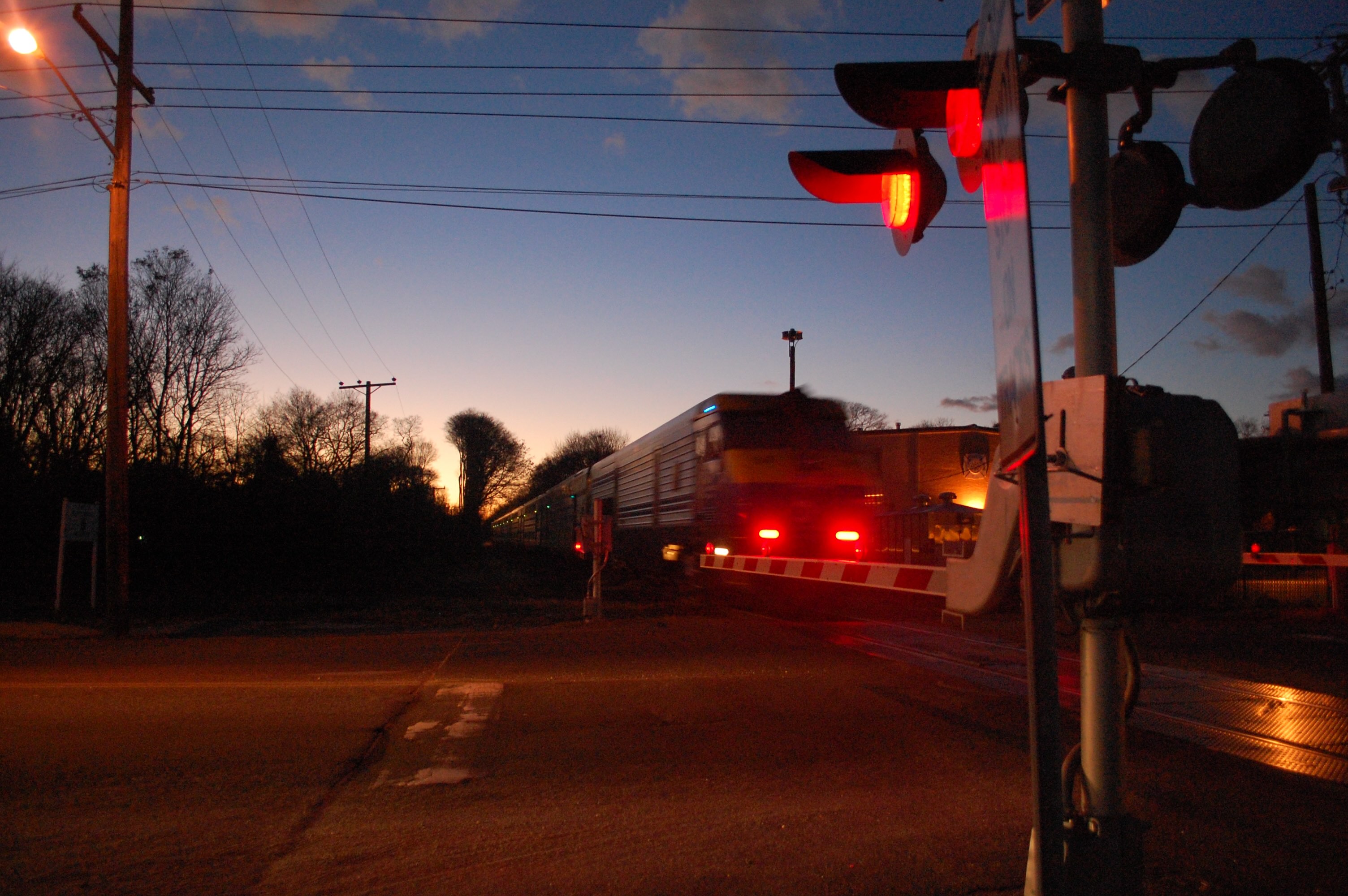
“The following evening, I walked up to the locomotive at Hampton Bays to sit with the Engineer. Perhaps it was morbid curiosity, but I also thought it good to have a witness to whatever might happen. After slowing down, the Engineer pointed to the location of the last incident. He described everything in detail again, emphasizing the woman’s ghoulish appearance. While slowly rolling through the scene of the crime, so to speak, all I got was a serious case of the willies.”
Artie stopped for a moment as we approached the trestle over the Shinnecock Canal. The locks were open and a foreboding scene of roiling saltwater flowed below us. The locomotive leaned into a banked curve and gradually rose to meet the rising grade beyond. I snapped the throttle back to maximum effort and the engine roared. Gradually, horsepower and amperage overcame the weight of the coaches behind us. Artie nodded, as if to agree with my timing on the throttle. Once the engine chugged along comfortably, he returned to his story.
“The next couple of weeks were quiet. We never saw the woman, but we didn’t see any police, either. The Engineer remained incensed and continued to reduce his speed through the area. Perhaps he knew what was coming. By then, the woman had become an all-consuming obsession with him. He began referring to her as the White Witch.
“If she showed up again, the Engineer threatened to stop the train and chase her into the woods, a plan of action the Conductor advised against. There really wasn’t anything we could do. We weren’t the police and didn’t have the right to apprehend anyone.
“This is it.”
Artie pointed toward the wayside.
“This is where it happened.”
He stared off into the rushing blur of dark green for an uncomfortable amount of time. Between scattered evergreens, the limbs of bare-knuckled oaks grasped toward an ominous moon.
“I remember the evening starting out uneventful. I was just getting to the point where I wasn’t holding my breath through the area anymore, then the brake system went into emergency. Since the Engineer was still abiding by his self-imposed speed restriction, the train didn’t roll far after the brakes applied. It was only a few seconds after we stopped when I heard the yells of the Engineer outside. He must have been running at a pretty good clip. He was already past the first coach by the time I got a door open. He ducked under some tree limbs, then made for a clearing in the distance. His flashlight bounced so radically, it’s a wonder he didn’t trip and break a leg.”
Artie swung his arms around, giving his best impression of running through the woods. After a quick glance at me, his overacting ceased. He took a deep breath, cleared his throat, and pressed on.
“It was the exact same weather outside as the last time it happened — foggy, misting, everything wet but it wasn’t raining. The Conductor gripped my shoulder as I was about to climb off the train. He suggested I get my gloves. With all the adrenaline pumping, it didn’t occur to me why I might need them.
“The Conductor was waiting for me on the ground when I returned. It sounded as though the Engineer was a pretty good distance into the clearing. Instead of following in the Engineer’s footsteps, we walked some distance alongside the train. The Conductor wasn’t in the best of shape. I did my best to find a decent path for him, or at least that’s what I told myself. I certainly wasn’t in a rush to find whatever awaited us in the woods.”
Artie stopped speaking again. He looked away from the windshield and shook his head. For the last mile, he had been in a trance-like state.
“Memory is a tricky thing,” Artie said, “It’s amazing what it can bring back.”
He took another couple of puffs.
“As we moved deeper into the woods, the Engineer’s voice became clearer. We saw his flashlight focused on something. The yelling was unrelenting. We approached the scene with a perfect side view of everything. The Engineer was directly facing the focus of his wrath. She was exactly as described, her nightgown, her hair, the unnaturally pale skin. The woman stood defiantly before him, tall, perfectly upright, with her back against a tree. Her mouth remained open, bulging eyes stared. She took his abuse without so much as a whimper. Her waist-long hair and gown stirred in the breeze. The varying density of the surrounding fog altered things. She glowed in the unsteady beams of artificial light.
“I was taking it all in, focused on her face and the indescribable expression it held. Her refusal to answer for her actions infuriated the Engineer. He moved closer to her, his face within inches of her own. ‘Do you have any idea what your little game is doing to me? You’ve damn near given me a heart attack! What have you got to say for yourself? Do you hear me? Answer me, goddamn it!’
“The Conductor stood next to me, repeating something I couldn’t comprehend. He elbowed me in the ribs twice before I responded. There was too much coming at me; nothing made sense. The Conductor grabbed my arm and lowered it to direct my flashlight’s beam toward the woman’s feet. Even though I clearly saw them, it took a moment, and some movement, before I realized what was happening. Her feet were bare and dirty, smudged with creosote, but there was something dripping as well. Only after a gust of wind rustled the trees did I notice her toes weren’t touching the ground. She moved backward, then slightly forwards. Her dress and hair continued to move delicately around her. The breeze shifted, then another gust blew in. Her torso moved backward, her legs and feet slightly forward. She was only an inch or two off the ground, but from our vantage point it was clear.
“I looked at the Conductor for verification. His hand slowly moved my arm upward, then stopped again. He never spoke a word, never looked at me, but the expression on his face told me to look again. My flashlight focused on her back. There was blood — lots of it — splattered across the tree, running down her back, dripping off her toes.
“The Engineer had backed off, out of breath and shaking his head in frustration, unaware of the truth. Turning his attention toward us, he suggested a solution. ‘I say we leave the Brakeman with her and call the cops in Southampton. Let them drive out here and lock her up.’ He then looked directly at me. ‘You okay with this, kid? We’ll pick you up on the way back.’ I couldn’t answer. He repeated his question. ‘You okay, kid?’
“The Conductor glanced at the Engineer, then shifted his gaze toward the side of the woman he couldn’t see. Confused, the Engineer took a few steps in our direction. The Conductor nodded toward the woman’s back. Once the Engineer figured things out, he broke down. Tears flowed as he kept repeating the same words, ‘Dear God what have I done?’
“The White Witch had stood her ground that night. On impact, she had been catapulted off the nose of the locomotive. She’d probably flown backwards for 50 yards before getting impaled on a broken tree limb. What were the odds of her landing like that? An inch off the ground with eyes and mouth wide open? There wasn’t a single drop of blood on the front of her.”
When Artie finished his story, we both sat quietly. I feathered the horn handle to reduce volume for the next several grade crossings. The extended moment of silence seemed appropriate. As the Locomotive neared the spot where it usually stopped in Southampton Station, Artie got up out of his seat.
“You run a nice train, kid. I hope to God you have a more pleasant career than I’ve had.”
He gave me a kind-hearted smile, reminiscent of the old man in the park again, then exited the cab. I watched Artie casually walk back to the first open coach, feeling more displeased with myself than anything else. I was sorry to nudge him into telling his story, regretting the horror it surely recalled.
With one foot on the train, Artie glanced past the coaches behind him. The Brakeman waved another hand sign, right on cue. Instead of sounding the horn when Artie passed a hand sign, I leaned out of the cab and returned his wave. He smiled before withdrawing into the warmer confines of the train.
Throttle open again, I leaned into my seat to find the one comfortable spot, my mind drifted as it often did on long hauls. I considered how many stories like Artie’s were being carried around by other old-timers. I wondered how many stories I’d have when I was an old-timer.