
Dashing Slowly
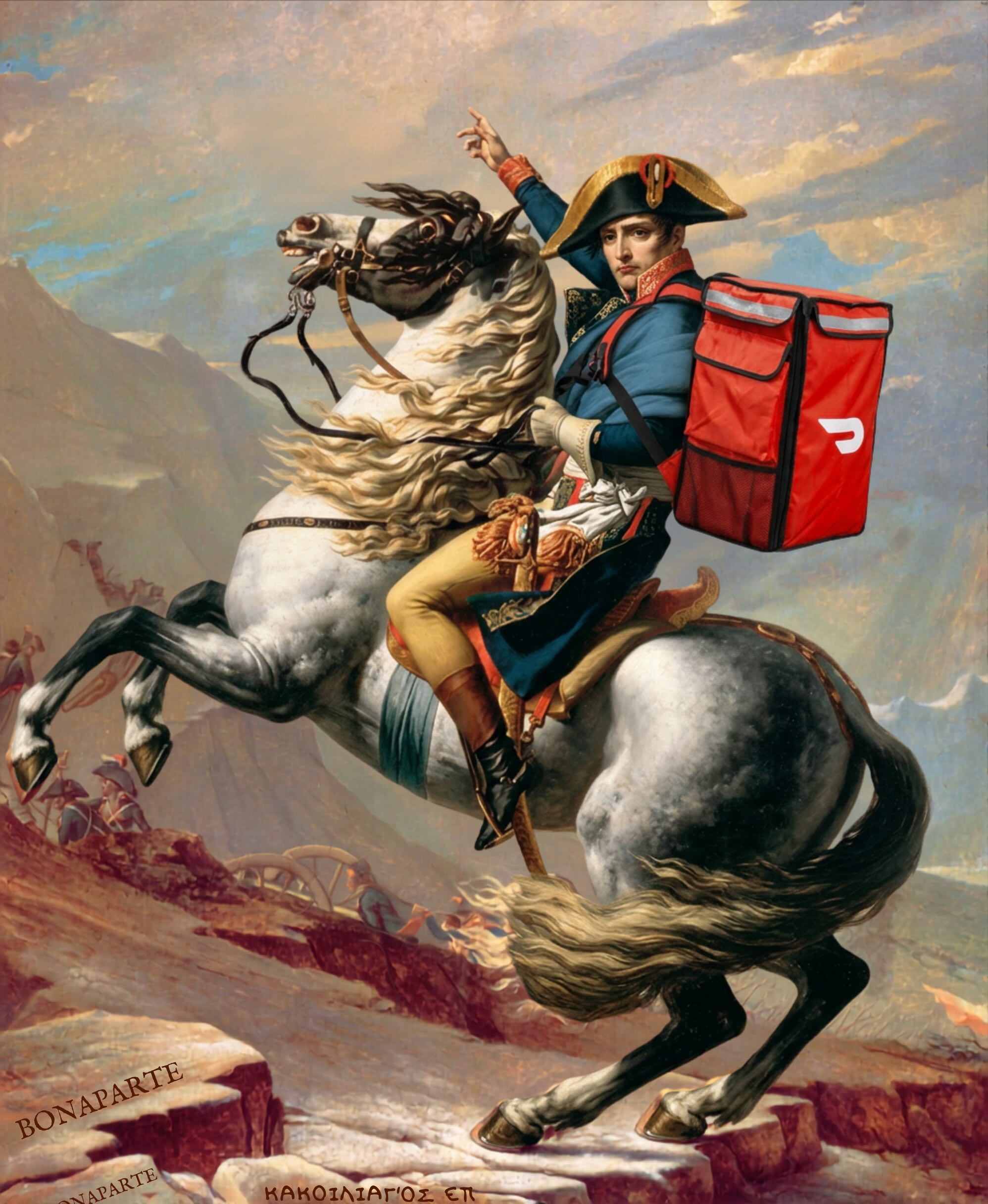
On a midsummer evening, a delivery driver opens his DoorDash app. To log in, he scans every angle of his scruffy, 40-year-old face, then hits a button marked return to dash.
A heat map takes over the screen, demarcating “hotspots” — locations with the highest volume of delivery requests — through red overlays and flame icons.
“You go wait at the hotspots,” says the Dasher, who asked to remain anonymous to protect his job. “The hotter the flame, the more chance you get.” The biggest flame icon is at Kumiso, the ramen and sushi place in East Hampton Village, so we head towards the Reutershan parking lot from The East Hampton Star’s office at the other end of Main Street. A request comes in almost immediately, announced by three sets of insistent beeps and a countdown; Dashers have only 50 seconds to accept an offer before it’s sent to a different user.
The request is for a pickup at Sant Ambroeus, the elegant Italian eatery on Newtown Lane, and the Dasher is pleased. “This is a crazy first order,” he says. “Super easy.” We’re already close to the restaurant, and accepting a takeout bag from the host is quicker than hunting down items at a store. The promised payout of $13.80 — the base pay that DoorDash doles out according to time and distance, plus the pre-added tip on the expensive food — is relatively lucrative compared to the $6 or $7 offers for faraway pickups that the Dasher often fields. He’ll expend limited gas and be able to accept his next trip quickly.
The trouble with this logic becomes apparent immediately: there are too many people on the roads.
The Dasher cannot find parking. We circle the clogged lot behind behemoth Range Rovers and Rivians and wait while a couple in matching white visors strolls leisurely across our path. By the time we find a spot we’re skimming the end of the allocated pickup window, and the takeout bag is already waiting when we rush over to the host stand. The Dasher uploads a photo of the receipt onto the app and then clicks confirm pickup.
The exact dropoff location is revealed only after the pickup is complete, when Dashers have no choice but to complete the trip or receive an “Order Picked Up But Never Delivered violation,” which can result in the delivery driver’s account being terminated. The dropoff location is much further than the Dasher had expected, way out in Sagaponack. The app estimates an 18-minute drive, and has calculated the Dasher’s base pay accordingly, but it’s a summer evening on a Friday in East Hampton and we’re skeptical.
At 5:30, we head west on 27 with the sun directly in our eyes. We sit in a procession of stalling vehicles jerking forward in overly optimistic bursts. The Rigatoni Strofinati in the back seat taunts us — a forbidden pleasure meant for another — and we’re suddenly both extremely hungry. We imagine the Dasher showing up to the customer’s front door with a little red sauce smeared on his white shirt and a noodle stuck in his beard. Have a good night, guys, enjoy!
“If you start to stretch the time or cancel, you get a bad rating,” says the Dasher. “One time I got stuck in the snow and had to get my car dug out. So I had to update that I wasn’t gonna make it. They gave me a bad rating.” The Dasher doesn’t know his current rating or how it affects his business, but intuits that it should be kept up or else.
Sitting in bumper-to-bumper traffic on roads that are nearly empty eight months out of the year produces an edgy agitation in the Dasher. He should already be at the dropoff location, accepting his next offer, but instead we’re standing still, stalling, waiting, wasting gas. Traffic seems like a Hamptons equalizer; the Dasher’s barely functioning Jeep crawls at the same pace as luxury vehicles with Florida license plates. The asymmetrical dynamic that dictates interactions between workers and summer people falls away on roads and in parking lots, where rules of the road reign, like Justice, blindly. But the shared ground may be illusory, and the class battle rages on: The Dasher is trying to work, and resents the visitors taking over the roads in their frantic attempts to squeeze every drop of pleasure from their weekend. The visitors, meanwhile, have spent astronomical amounts of money to be here and resent that they’re not getting the frictionless experience they paid for, and that the trade parade will make them late for their dinner reservation in Water Mill.
“Pick up the f****** pace!” the Dasher curses out a group of teenage boys jogging past our car. We arrive
at 5:59 — 12 minutes past the app’s estimated time — in an atmosphere of angst.
The gate at the end of the driveway won’t open. The Dasher presses the intercom and calls the number listed on the app, but he’s forced to sacrifice three tense minutes. What if they don’t come? What does he do with the food? Is there a button for that? Eventually, a young woman renting the house who does not know how to open the gate appears, and the Dasher passes over the food while snapping a blurry picture of the successfully delivered bag. He tries to click complete delivery and upload the photo, but can’t get cellphone reception until we are back on the main road. From 5:25 to 6:07: $13.80.
What followed was a series of minor panics. The Dasher accepts an offer to pick up an air mattress at a hardware store, but has trouble locating the item (it’s on a high shelf and the store clerk needs a ladder to grab it). A cashier can’t figure out how to sync his checkout system with DoorDash and has to call his supervisor at home, who says, “Why are you still open? We closed 15 minutes ago.” There’s an accident on Route 114 and we have to take a detour. Multiple bad offers come in, like a $10.55 request for a pickup from La Fondita in Amagansett while we’re in Sag Harbor; the Dasher worries that declining will affect his “decline rate,” which indeed it does. The app, a demanding and fickle companion, has trouble loading at every juncture.
DoorDash offers its gig workers flexibility — you can log on after dropping your kid off at school, or in between day-job shifts. You don’t, as the company advertises, have to report to some boss. And everyone loves a bit of Hamptons voyeurism: The Dasher tells a story about dropping off 100 cans of whipped cream to the same house on two separate occasions.
But as is often the case in the Hamptons gig economy, the gold rush proves a mirage. “You can’t actually make a living off of it,” says the Dasher. “Gas prices are too high, so your living expenses would need to be so insanely cheap.” Although the area’s concentration of wealth means that orders are higher — rich people ordering off expensive menus — the heavy traffic and gas prices keep the income per hour relatively low.
“If you worked at it, like, 10 hours a day, you’d still be making a shitty living,” he says. “Let’s say you made, like, $200 a day, right? That’s $1,000 in a work week. So four K a month, and then $48 K per year. But that doesn’t account for gas,” he says. “Like, I guess you could live on that. If you lived with your parents. Which I don’t — which I do not do. I definitely have not lived with my parents for over a year now.”