
Pop-Up X The Hamptons
In high season, the inboxes of editors at The Star and east fill up with emails from P.R. agents inviting reporters to events, angling for their clients’ inclusion in a “to-do this weekend” roundup or “best-of” list. Seasoned staff often ignore these invitations, weary of endless follow-ups imploring, “Have you had a chance to try the product yet?” or, “Should we set up a chance to chat with the founder?” But this summer, the newsroom noticed a shift that caught our attention: Almost all our party invitations were for pop-up events.
Here is just a smattering:
Cowboy Colostrum has teamed up with Drugstore, Jeremy Fall’s organic, regenerative, seed-oil-free all-day kitchen, to create the Half Moon smoothie — a limited-edition take on the iconic black-and-white cookie.
So excited to officially share Edition Hotels and American Express are turning Montauk’s Crow’s Nest into the Summer Edition Montauk.
The H.wood Group and Chase Sapphire Reserve are heading out east again this summer, bringing Delilah back to the Hamptons, transforming Mary Lou’s Montauk into one of the season’s most sought-after destinations.
Shop the Vince Summer 2026 Collection while sipping signature Napa Valley reds and whites from one of California’s most storied wineries.
Popeyes is officially heading to Montauk this summer as the Surf Lodge’s exclusive Chicken Tender featured in the legendary “Chicken Tender Tower.”
The pop-up is not a new phenomenon. In its most elemental form, as described by Rachel Granger — founder of Blue Jeans Public Relations., the firm behind Cowboy Colostrum’s partnership with Drugstore — it is the short-term “takeover of any space to sell product or collaborate.” From this lens, the pop-up has been around since the very beginnings of trade, when transient merchants set up temporary stalls in Greek agoras or Egyptian bazaars. Today, endless numbers of brands set up shop inside other commercial properties and “collaborate” with their hosts; Starbucks sells themed beverages at Disneyland, Lego sells airplane kits at J.F.K.
The residency of one brand in a small patch of local real estate, or nestled inside another brand, though, doesn’t quite capture the spirit of the contemporary Hamptons pop-up frenzy. “The level at which we’re spending and producing marketing moments is the shift we’re seeing,” says Granger. The difference lies in the framing, in the hype: Instagram fliers describe products or experiences as “iconic” and “signature,” and imbue them with the urgent status of “exclusive” and “limited-edition.” Lines form, content floods feeds, and hype begets hype.
Participating in a “marketing moment” can feel faintly embarrassing. Somewhere in the back of your mind, you’re aware that you’re not necessarily drawn by the product itself: The product’s value isn’t totally intrinsic but is ginned up by buzz. You could even argue that what’s really being sold doesn’t exist in physical form — the Popeyes chicken at Surf Lodge was not made from a bird superior to that inside a typical, $9.99 Popeyes combo box. Diners are lining up for association with the trendy Montauk club.
These moments rely on an edge of manufactured scarcity — a pop-up or “brand activation” is here today, gone tomorrow, creating anxiety that you need to catch it before it’s too late. The moment is documented, transmitted, and amplified as clout on social media . . . which then might translate to future pop-up invitations, even greater access to more exclusive moments.
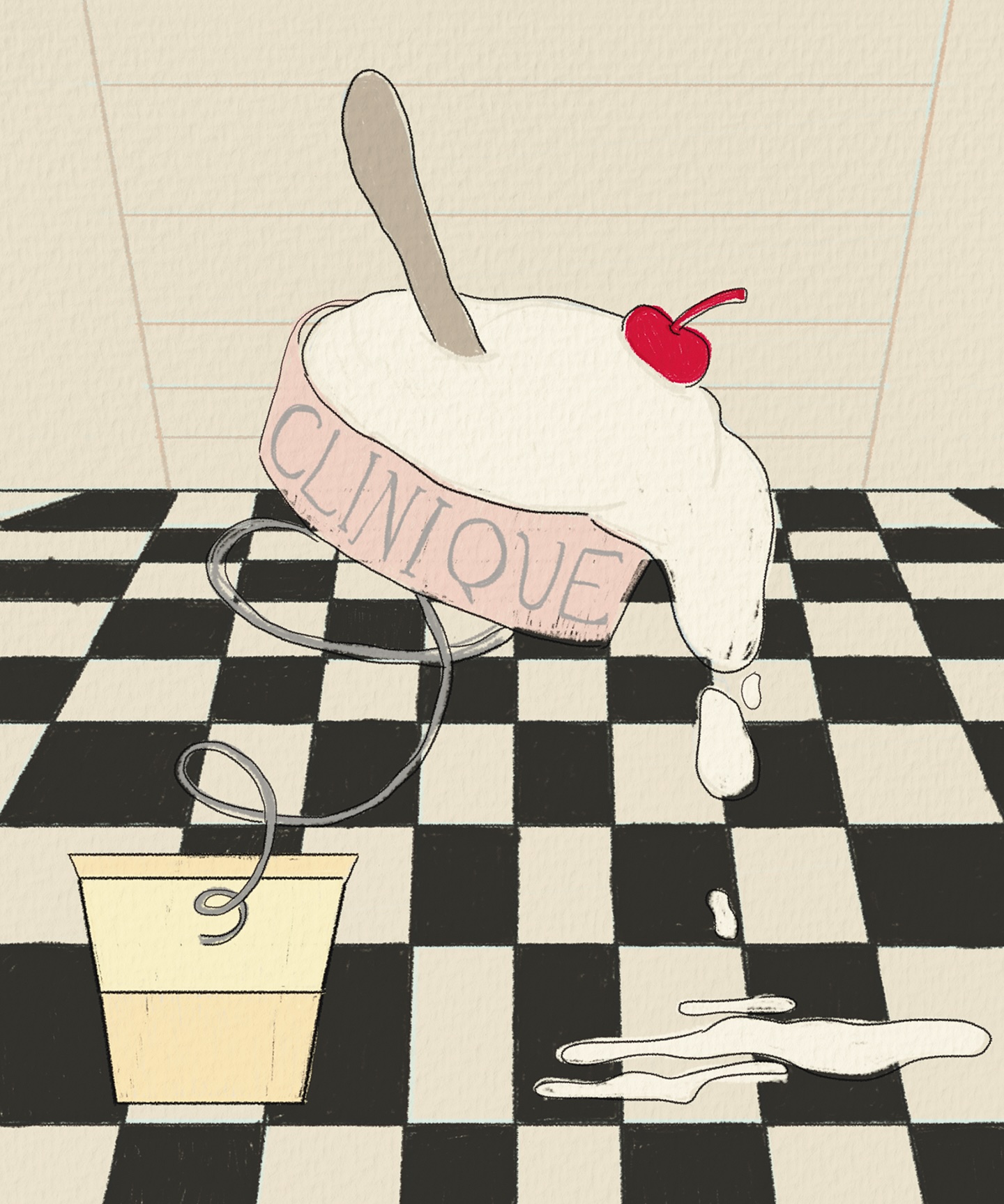
Regardless of the distance between the merch’s intrinsic worth and the value of the manufactured, ephemeral moment, pop-ups seem to work. At a recent Clinique pop-up inside the Bluestone Lane x Frankies Bikini pop-up (triple pop!) in downtown Montauk, a young retail associate said in August that she had noticed a marked increase in foot traffic, drawn in by a coffee drink inspired by Clinique’s popular Black Honey Almost Lipstick. (It tasted — uncannily— like a blended-up lipstick.) A representative from FreshDirect, which popped-up at Camp Rubirosa in East Hampton Village this summer, reported that “In the Hamptons, where we’ve invested in local partnerships and community activations, we’ve seen a 7-percent year-over-year increase in sales.” Granger says that she often fields requests from East End businesses requesting that her firm facilitate pop-ups inside their storefronts, too.
“I think, more than ever, people are dying to feel part of a community,” says Granger. “People want to show up in person and meet people and test it out and then decide whether or not they’re going to support that brand.” At a good pop-up — so goes this theory, anyway — the shopping experience can feel like a pleasant blast from the past, a reprieve from the isolation of online shopping, where customers can engage with vendors and each other.
But for residents, and especially those who are still hanging onto their own small businesses, the pursuit of community through pop-up culture carries a certain irony. Since Coach Leather and LeSportSac first touched down in Amagansett Square back in the 1970s, setting off a chain-store panic, residents have watched with mounting horror as main streets have devolved into luxury malls. Some of the national and international corporations that have put down stakes here have tried to forge bonds of community by doing things like investing in local nonprofits (see: the Ralph Lauren brand and its longtime association with the East Hampton Historical Society) or remaining open through winter; but most have not. A pop-up has an even more tenuous connection with its host than a chain store does. It dissolves after only a couple days or months.
The pop-ups of 2026 further solidify the South Fork as the marketing fantasy of “the Hamptons,” where square footage of commercial properties is valued not so much by the goods sold per week but by its value in the public imagination. It’s a phantasm. Brands find a summer home here, but when the hype dies out, killed by the first, crisp autumnal breeze, there’s nothing left — even the fluorescent windows of the Dick’s Sporting Goods pop-up on the Reutershan parking lot will go dark.